


Keithley Instruments stands as a towering figure in the world of precision measurement technology. Founded in 1946 in Cleveland, Ohio, by Joseph F. Keithley, the company emerged during the post-World War II technological boom when the demand for accurate electronic measurement instruments was rapidly expanding. From its modest beginnings in a small workshop, Keithley grew to become a global leader in precision measurement instrumentation and test systems.
The company’s core business positioning has always centered on pushing the boundaries of measurement accuracy and reliability. Keithley established itself as the go-to provider for researchers, engineers, and scientists who required instruments capable of measuring electrical parameters with unprecedented precision. The company’s reputation was built on its ability to measure incredibly small currents—down to femtoampere levels—and voltages with exceptional accuracy, making it indispensable in cutting-edge research and industrial applications.
A significant milestone in Keithley’s journey occurred in 2010 when Tektronix, Inc., a leading provider of test, measurement, and monitoring instrumentation, acquired the company. This acquisition brought together two powerhouses of measurement technology, combining Tektronix’s expertise in oscilloscopes and signal analysis with Keithley’s precision in low-level measurements. The merger created synergies that enhanced both companies’ capabilities and expanded their collective market reach.
The corporate evolution continued in 2016 when Tektronix, along with Keithley, became part of Fortive Corporation following Danaher Corporation’s strategic restructuring. Fortive, a diversified industrial growth company, provided Keithley with additional resources and strategic direction while maintaining the brand’s commitment to innovation and quality. Despite these ownership changes, the Keithley brand has retained its identity and continues to be synonymous with precision measurement excellence.
Keithley Precision Measurement Instruments Collection

Keithley 2380 Series Electronic DC Load – Maximum of 750 W
Price: $4,127
Dynamic Power Testing Performance
The Keithley 2380 Series delivers exceptional precision and versatility in DC load testing, supporting modes such as constant current (CC), constant voltage (CV), constant resistance (CR), and constant power (CP). It’s capable of handling up to 750 W of power, making it ideal for testing high-capacity power supplies and batteries.
High-Speed Response and Flexibility
With rapid load switching speeds up to 25 kHz, the 2380 Series provides smooth transitions for dynamic load applications. Engineers can take advantage of its internal, external, and remote triggering capabilities, ensuring tight synchronization across test setups for accurate and repeatable results.

Keithley 2015 THD Digital Multimeter
Price: $1,397
All-In-One Audio and Electrical Analysis
The Keithley 2015 THD combines the functions of a precision 6½-digit digital multimeter with audio and harmonic analysis capabilities. It enables engineers to measure voltage, resistance, current, frequency, and total harmonic distortion — all using one compact, half-rack instrument.
Optimized for High-Fidelity Measurements
With its advanced measurement capabilities, the 2015 THD supports audio band quality evaluations for devices such as amplifiers and signal paths. Its precision and ease of use make it a valued instrument in audio electronics, calibration labs, and R&D environments.
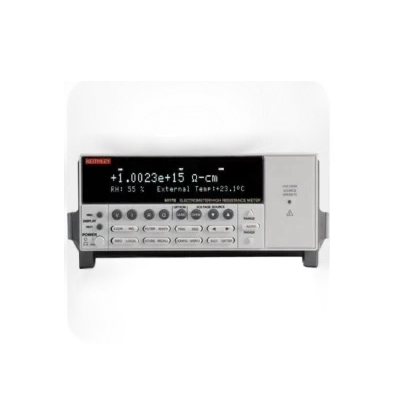
Keithley 6517B Electrometer / High Resistance Meter
Price: $19,510
Unmatched Sensitivity and Ultra-High Resistance Testing
The Keithley 6517B is engineered for extreme measurements — from 1 fA to 20 mA — and resistances up to 10¹⁸ Ω. It offers <3 fA input bias current, 6½-digit resolution, and voltage sourcing up to ±1000 V, making it indispensable for ultra-low current and high-impedance testing.
Integrated ASTM D257 High Resistivity Solution
Designed for demanding test requirements, the 6517B pairs seamlessly with Keithley’s 8009 Resistivity Test Fixture and KickStart High Resistivity Software, delivering a complete hardware–software solution for material resistivity characterization.

Keithley 2100/100 Digital Multimeter
Price: $1,683.41
Reliable and Accurate Laboratory Measurements
The Keithley 2100/100 offers 6½-digit precision and a versatile measurement capability that ensures consistent performance across voltage, current, and resistance parameters. This bench multimeter provides laboratory-quality accuracy at an exceptional value.
Engineered for Versatility and Longevity
Built by Keithley Instruments, Inc., the 2100/100 is a trusted choice in industrial, educational, and laboratory environments. Its robust design and dependable performance make it ideal for daily measurement tasks where precision is crucial.

Keithley 2100/120 Digital Multimeter
Price: $1,889.07
High-Accuracy Bench Multimeter for Professionals
With 0.000038 accuracy and a range spanning 100 mV to 1 kV, the 2100/120 Digital Multimeter delivers exceptional precision for high-stakes testing. Its True RMS feature ensures exact readings even for non-sinusoidal signals.
Comprehensive Measurement Capabilities
This instrument offers resistance measurements from 10 Ω to 1 pΩ and frequency capabilities from 3 Hz to 300 kHz, meeting the diverse needs of electrical engineers. The 2100/120’s combination of range and resolution defines world-class bench performance.

Keithley 3706A-S High-Performance Digital Multimeter
Price: $4,855.66
Advanced Precision and Automation
The Keithley 3706A-S multimeter stands at the top of bench instruments with 7½-digit accuracy, auto-ranging, and True RMS measurement capabilities. With support for 50–60 Hz frequency and high throughput, it’s designed to streamline complex testing operations.
Professional Design and Build Quality
Measuring 3.5 in × 19 in × 18 in, the 3706A-S offers durability and ergonomic design suitable for large test setups. Its superior accuracy of 0.01 and broad voltage range from 100 V to 240 V make it perfect for laboratory and manufacturing test systems where precision and reliability are non-negotiable.
Brand Development Journey
Keithley’s early years were characterized by focused development of test instruments that addressed specific measurement challenges faced by electronics manufacturers and researchers. The company’s founders recognized that as electronic components became smaller and more sophisticated, the need for more sensitive and accurate measurement tools would grow exponentially.
Throughout the 1950s and 1960s, Keithley expanded its product portfolio beyond basic test equipment to include specialized instruments for measuring low-level currents and high-resistance values. This expansion positioned the company at the forefront of semiconductor testing as the transistor revolution transformed the electronics industry. The ability to characterize semiconductor devices accurately became crucial, and Keithley’s instruments were perfectly suited for this purpose.
The 1970s and 1980s marked Keithley’s breakthrough in precision current measurement and low-level measurement technology. The company developed picoammeters and electrometers capable of measuring currents in the picoampere and femtoampere ranges—measurements that were previously considered impossible or impractical. These innovations opened new possibilities in materials science, enabling researchers to study the electrical properties of novel materials and nanoscale structures.
As industries evolved, Keithley strategically expanded into high-precision measurement domains including semiconductor characterization, materials science, and nanotechnology. The company recognized that emerging fields like photovoltaics, advanced materials research, and nanoelectronics would require even more sophisticated measurement capabilities. Keithley invested heavily in research and development to create instruments that could meet these demanding requirements.
The establishment of a global market presence became a priority as Keithley’s reputation grew. The company built an extensive technical service network spanning North America, Europe, and Asia, ensuring that customers worldwide could access both products and expert support. This global infrastructure included regional offices, application laboratories, and partnerships with local distributors, creating a comprehensive ecosystem for precision measurement solutions.
Brand Positioning and Core Values
Keithley has cultivated a brand image as “the explorer of measurement precision limits.” This positioning reflects the company’s relentless pursuit of ever-greater accuracy and its willingness to tackle measurement challenges that others consider insurmountable. The brand represents not just instruments, but solutions to complex measurement problems that push the boundaries of what is scientifically and technologically possible.
The company’s mission centers on providing reliable measurement solutions for the scientific research, industrial, and educational sectors. Keithley understands that its instruments often serve as the foundation for groundbreaking discoveries, quality manufacturing processes, and educational advancement. This responsibility drives the company’s commitment to quality, accuracy, and reliability in every product it delivers.
A defining characteristic of Keithley’s corporate philosophy is its technology innovation driven by customer needs. Rather than developing technology in isolation, Keithley maintains close relationships with its user community, understanding their challenges and incorporating their feedback into product development. This approach has resulted in instruments that not only meet technical specifications but also address real-world application requirements, from user interface design to software integration capabilities.
Core Product Lines and Technical Features
Source Measure Units (SMU) Series
The Source Measure Unit represents one of Keithley’s most significant innovations and arguably its most recognized product category. An SMU is a sophisticated instrument that combines the functionality of a precision power source and a precision measurement instrument in a single unit. This integration offers tremendous advantages in terms of space efficiency, cost-effectiveness, and measurement accuracy compared to using separate source and measurement instruments.
The 2400 Series represents Keithley’s flagship line of general-purpose SMUs, designed to meet the needs of a wide range of applications from basic research to production testing. These instruments can source and measure both voltage and current with excellent precision and stability. The 2400 Series is particularly popular in academic and industrial research laboratories for characterizing electronic components, semiconductor devices, and materials.
The 2600 Series takes SMU technology further with enhanced scripting capabilities and faster measurement speeds. These instruments feature embedded Test Script Processor (TSP) technology, allowing users to create and execute complex test sequences directly on the instrument without requiring an external computer. This capability is invaluable in production environments where test throughput is critical. The 2600 Series also offers better sensitivity for low-current measurements, making it suitable for applications involving high-resistance materials and low-power devices.
The 2700 Series represents Keithley’s data acquisition and multimeter systems, which, while not traditional SMUs, integrate seamlessly with SMU instruments to create comprehensive test solutions. These systems provide multiple measurement channels and switching capabilities, enabling users to automate complex test sequences and characterize multiple devices or test points simultaneously.
Application scenarios for SMU instruments are remarkably diverse. In semiconductor device testing, SMUs are used to characterize transistors, diodes, and integrated circuits by sourcing voltages or currents and measuring the resulting electrical behavior. In materials science, researchers use SMUs to study the electrical properties of novel materials, including conductivity, resistivity, and temperature coefficients. The photovoltaic industry relies heavily on SMUs for testing solar cells, measuring their current-voltage characteristics under various illumination conditions.
The technical advantages of Keithley SMUs are substantial. High precision is achieved through carefully designed analog circuitry, advanced analog-to-digital converters, and sophisticated calibration techniques. Low noise performance is critical for detecting small signals in the presence of electrical interference, and Keithley’s instruments employ extensive shielding and filtering to minimize noise. Wide dynamic range allows a single instrument to measure everything from nanoamperes to amperes, or microvolts to kilovolts, without requiring range changes or additional equipment.
Digital Multimeters (DMM)
Keithley’s digital multimeter product line serves the high-precision segment of the measurement market, where resolution and accuracy are paramount. While many manufacturers produce multimeters, Keithley’s offerings distinguish themselves through exceptional measurement resolution and stability, making them suitable for metrology applications and demanding laboratory measurements.
The high-precision bench-top digital multimeter series includes instruments offering 6½-digit to 8½-digit resolution. To understand what this means, a 6½-digit multimeter can display readings with 0.0000001 precision in its most sensitive range—for example, measuring voltages to the microvolt level on a 10-volt scale. An 8½-digit instrument extends this to even finer resolution, enabling measurements that were previously possible only with specialized laboratory standards.
These instruments are designed for laboratory-grade precision measurement requirements. Applications include calibration of other instruments, verification of reference standards, characterization of precision electronic components, and research measurements where uncertainty must be minimized. The stability of these multimeters over time and across environmental conditions makes them suitable for long-term monitoring applications as well.
Special features distinguish Keithley DMMs from more basic multimeters. Low-level measurement capability is crucial when working with thermocouple signals, high-resistance measurements, or sensors that produce small output signals. High-speed sampling allows these instruments to capture transient events or perform statistical analysis on rapidly changing signals. Multi-channel scanning capability, available on certain models, enables automated testing of multiple test points without manual intervention, dramatically increasing productivity in manufacturing and quality control environments.
Nanoscale Measurement Systems
Keithley’s picoammeters and electrometers represent the pinnacle of low-current measurement technology. These specialized instruments are designed to measure electrical currents and charges at levels that challenge the fundamental limits of electronic measurement. Where conventional ammeters might measure down to milliamperes or microamperes, Keithley’s instruments routinely work in the picoampere (10⁻¹² amperes) and femtoampere (10⁻¹⁵ amperes) ranges.
The ultra-low current measurement capability of these instruments opens up entire fields of research that would otherwise be impossible. In materials science, researchers study the electronic properties of individual molecules, nanowires, and two-dimensional materials like graphene. These structures carry incredibly small currents, and measuring them requires instruments with exceptional sensitivity and stability. Keithley’s electrometers can detect currents as small as a few electrons flowing per second.
Applications in materials science and nanotechnology research are particularly important. Scientists investigating the electrical properties of new materials for electronics, energy storage, or sensing applications depend on accurate low-level measurements to understand material behavior. In nanotechnology, where devices may consist of just a few atoms or molecules, the currents involved are naturally minuscule, and specialized measurement equipment is essential.
High-impedance measurement and charge measurement technologies are core capabilities of Keithley’s electrometer product line. High-impedance measurements are necessary when the source being measured has very high resistance, such as measuring the leakage current of insulators or the conductivity of highly resistive materials. Charge measurements are important in applications like radiation detection, where ionizing radiation creates charge carriers that must be measured to determine radiation intensity. Keithley’s electrometers feature input impedances exceeding 10¹⁴ ohms, ensuring that the measurement process itself doesn’t significantly alter the circuit being measured.
Parameter Analyzers and Curve Tracers
Semiconductor device characterization systems represent another critical product category for Keithley. These instruments are specifically designed to measure the electrical characteristics of semiconductor devices, generating the current-voltage (I-V) and capacitance-voltage (C-V) curves that define device behavior. Understanding these characteristics is essential for device design, process development, and quality control in semiconductor manufacturing.
I-V and C-V characteristic curve testing provides comprehensive information about how a semiconductor device responds to different electrical conditions. For a transistor, I-V curves show how current flows between terminals as voltages are varied, revealing parameters like threshold voltage, transconductance, and on-resistance. C-V measurements reveal information about charge storage, depletion regions, and interface states in semiconductor structures. Keithley’s parameter analyzers automate the process of generating these curves, sweeping voltages and currents while capturing measurement data at precisely controlled intervals.
Applications span power devices, photovoltaic cells, and LED testing. Power semiconductor devices like MOSFETs, IGBTs, and diodes require thorough characterization to ensure they can handle high voltages and currents reliably. Solar cells and photovoltaic materials must be tested to optimize their efficiency and understand their behavior under different illumination and temperature conditions. LEDs and other optoelectronic devices require characterization of both their electrical and optical properties, often simultaneously.
Automated testing and data acquisition functionality are integral to modern parameter analyzers. These instruments can execute complex test sequences, adjusting source levels, measurement ranges, and timing parameters automatically based on user-defined scripts. Data is captured, stored, and analyzed in real-time, with results displayed as curves, tables, or statistical summaries. This automation is crucial in research environments for exploring device behavior across many conditions and in production environments for high-throughput testing.
Data Acquisition and Switching Systems
Keithley’s data acquisition and switching systems provide the infrastructure for building comprehensive automated test solutions. These systems expand the capabilities of individual instruments by enabling multi-point measurements, signal routing, and system integration. They serve as the nervous system of complex test setups, coordinating measurements across multiple instruments and test points.
Multi-channel data acquisition systems allow simultaneous or sequential measurement of many signals. A typical system might include mainframes with multiple plug-in modules, each designed for specific measurement types—voltage, current, resistance, temperature, frequency, or digital signals. By combining different modules, users can create custom measurement solutions tailored to their specific applications. This modularity also provides flexibility as requirements change; new modules can be added without replacing the entire system.
Matrix switching modules and scan cards provide the connectivity infrastructure for routing signals between devices under test and measurement instruments. A matrix switch might have dozens of inputs and outputs, with relays or solid-state switches that can connect any input to any output under software control. This capability is essential for testing devices with many pins or for testing multiple devices in sequence without manual cable changes. High-quality switching is critical to maintain measurement integrity; Keithley’s switches feature low contact resistance, minimal thermal EMF, and excellent isolation between channels.
Integration with source measure units and multimeters creates powerful automated test platforms. A typical setup might use an SMU to source stimulus signals, a switching system to route these signals to different test points on a device, and a multimeter to make precision measurements of the response. All of this is coordinated by software running on a host computer, which controls the instruments, manages data collection, and performs analysis. Such integrated systems are the foundation of automated test equipment in semiconductor manufacturing, electronics production, and research laboratories.
Applications in automated test system construction are limitless. Production test systems verify that manufactured devices meet specifications before shipping. Reliability test systems subject components to accelerated aging conditions while continuously monitoring their performance. Research systems enable scientists to explore parameter spaces that would be impractical to investigate manually. In all these applications, Keithley’s data acquisition and switching products provide the reliability, accuracy, and flexibility required for success.
Application Fields and Industry Solutions
Semiconductor and Electronic Device Testing
The semiconductor industry represents one of Keithley’s most important application domains. As semiconductor devices have become smaller, faster, and more complex, the measurement challenges have intensified correspondingly. Keithley’s instruments have evolved alongside the industry, providing solutions for each new generation of technology.
Wafer-level device testing and verification occurs during semiconductor manufacturing, where devices are still part of a silicon wafer before being separated into individual chips. At this stage, hundreds or thousands of devices are tested to verify that the manufacturing process has produced working circuits with acceptable characteristics. Keithley’s SMUs and parameter analyzers are ideally suited for this application, providing the precision and speed required for high-throughput wafer probing while maintaining the accuracy needed to detect subtle process variations.
MOSFET, BJT, and diode characteristic analysis forms the foundation of semiconductor device understanding. MOSFETs (Metal-Oxide-Semiconductor Field-Effect Transistors) dominate modern integrated circuits, and their characteristics must be thoroughly understood for circuit design and process optimization. BJTs (Bipolar Junction Transistors) remain important in analog and power applications, with their own distinct characteristics requiring measurement. Diodes, including specialized types like Schottky and PIN diodes, are fundamental building blocks requiring characterization. Keithley’s instruments measure the key parameters of these devices—threshold voltages, transconductance, breakdown voltages, leakage currents—with the precision required for device modeling and manufacturing control.
Power semiconductor device testing addresses the unique challenges of devices designed to handle high voltages and currents. Power MOSFETs, IGBTs (Insulated Gate Bipolar Transistors), and power diodes operate under conditions that stress both the device and the test equipment. They must be characterized not only at low currents where precision matters, but also at high currents where power handling becomes critical. Keithley offers specialized instruments and configurations for power device testing, including pulse testing capability to minimize device heating during measurements.
High and low temperature device characterization is essential because semiconductor devices must operate reliably across wide temperature ranges. Temperature affects virtually every device parameter—threshold voltages shift, carrier mobility changes, leakage currents increase. To understand and model these effects, devices must be measured at temperatures ranging from cryogenic levels (for some research applications) to 150°C or higher (for automotive and industrial applications). Keithley’s instruments are designed to maintain their accuracy across wide temperature ranges and integrate easily with thermal chambers and temperature-controlled probe stations.
Materials Science and Nanotechnology Research
Materials science research increasingly focuses on understanding electrical properties at the most fundamental levels. Whether investigating new battery materials, studying charge transport in organic semiconductors, or exploring quantum phenomena in two-dimensional materials, researchers need measurement tools capable of extraordinary sensitivity and precision.
Thin-film material electrical performance testing is crucial in many advanced material applications. Thin films—materials deposited in layers just nanometers to micrometers thick—exhibit electrical properties that can differ dramatically from bulk materials. Researchers use Keithley’s instruments to measure conductivity, resistivity, Hall effect parameters, and other properties of thin films. These measurements guide material development and process optimization in applications ranging from solar cells to electronic displays.
Nanomaterial conductivity and resistivity measurements present unique challenges. Nanomaterials may be in the form of nanoparticles, nanowires, nanotubes, or quantum dots, with dimensions measured in nanometers. At this scale, quantum effects become significant, and conventional measurement approaches may not apply. Keithley’s low-current measurement capabilities are essential for characterizing these materials, where currents may be in the picoampere or femtoampere range even under substantial applied voltages. Special probe configurations and shielding techniques are often required to achieve reliable measurements at these levels.
Two-dimensional materials research, particularly involving graphene and related materials, has exploded in recent years. Graphene, a single layer of carbon atoms arranged in a hexagonal lattice, exhibits extraordinary electrical, mechanical, and thermal properties. Researchers characterizing graphene and similar 2D materials like transition metal dichalcogenides face extreme measurement challenges. The materials are atomically thin, highly sensitive to their environment, and often have very small current-carrying capacities. Keithley’s electrometers and ultra-sensitive SMUs enable researchers to measure the electrical transport properties of these materials, advancing understanding and enabling new applications in electronics, sensors, and energy storage.
Superconducting and quantum materials research represents the frontier of condensed matter physics, where materials exhibit exotic behaviors like zero electrical resistance or quantum entanglement. Measuring such materials often requires cryogenic temperatures and exceptional stability. Keithley instruments are routinely integrated into specialized cryogenic probe systems for these applications, where the instrument’s stability, low noise, and precision are critical for detecting subtle quantum phenomena.
Photovoltaic and Renewable Energy Sector
The photovoltaic industry depends heavily on precise electrical measurement for solar cell development, manufacturing, and quality control. As solar energy becomes increasingly cost-competitive with conventional power sources, optimizing cell efficiency and ensuring manufacturing quality are paramount. Keithley’s instruments play a central role in both research laboratories developing next-generation solar technologies and factories producing millions of solar cells annually.
Solar cell efficiency testing is the fundamental measurement that determines how well a solar cell converts light into electricity. This involves measuring the cell’s current-voltage characteristic under standardized illumination conditions, typically simulated sunlight at 1000 watts per square meter (AM1.5 spectrum). From this I-V curve, key parameters are extracted: short-circuit current, open-circuit voltage, fill factor, and conversion efficiency. Keithley SMUs are the industry standard for these measurements, offering the combination of voltage sourcing, current measurement, and speed required for both R&D and production applications.
I-V characteristic curve generation and analysis reveals much more than just efficiency. The curve’s shape indicates cell quality, the presence of defects, and series/shunt resistance issues that affect performance. By analyzing how the I-V characteristic changes with temperature, illumination intensity, or time, researchers gain insights into fundamental device physics and degradation mechanisms. Keithley’s software tools facilitate this analysis, automatically extracting parameters, comparing curves, and identifying trends.
Photovoltaic module quality control extends testing from individual cells to complete modules containing many cells interconnected and encapsulated. Module testing verifies proper interconnection, identifies defective cells, and ensures the module meets performance specifications. Automated test systems using Keithley instruments can test modules rapidly, measuring not only electrical performance but also detecting anomalies like hot spots or cracked cells through thermal imaging integrated with electrical testing.
New photovoltaic materials research and development drives the industry forward. Perovskite solar cells, organic photovoltaics, quantum dot solar cells, and tandem architectures combining multiple materials offer potential for higher efficiency or lower cost. Each new material system requires extensive characterization to understand its properties and optimize performance. Keithley’s broad range of instruments—from ultra-sensitive electrometers for measuring recombination currents to high-speed SMUs for transient measurements—provides the complete measurement toolkit for photovoltaic research.
Display Technology and Optoelectronics
Display technology has evolved rapidly from bulky cathode ray tubes to thin, efficient flat panels based on liquid crystals, OLEDs, and microLEDs. Each generation of display technology brings new measurement challenges, and Keithley’s instruments have adapted to meet these needs, particularly in OLED and LED device characterization.
OLED and LED device testing requires simultaneous electrical and optical measurements. For an OLED pixel or LED chip, engineers need to know how much light is emitted at different drive currents, how the emission spectrum changes, and how the device ages over time. Keithley SMUs provide the precise current sources and measurement capability required, while integrating with optical measurement systems like spectroradiometers or integrating spheres to capture luminous intensity, color coordinates, and spectral power distribution.
Display panel quality inspection in manufacturing requires high-throughput testing of thousands or millions of pixels per panel. Automated optical inspection systems use Keithley instruments to drive pixels while cameras capture images for defect detection. Electrical testing verifies that each pixel can be addressed correctly and exhibits the expected current-voltage characteristics. Any anomaly—stuck pixels, brightness non-uniformity, or color shifts—must be detected before panels are shipped to customers.
Photodetector performance characterization is critical in applications from optical communication to medical imaging. Photodetectors convert light into electrical signals, and their performance is characterized by parameters like responsivity (how much current is generated per unit of incident light), dark current (current when no light is present), and response time. Keithley’s electrometers excel at measuring the very small currents generated by photodetectors operating at low light levels, while SMUs can characterize photodetector behavior across wide ranges of bias voltage and illumination.
Optical communications device testing includes characterization of laser diodes, photodetectors, modulators, and other components used in fiber optic communication systems. These devices operate at high speeds—often gigahertz frequencies—and must meet strict specifications for output power, wavelength, linearity, and noise. While high-frequency testing requires specialized equipment, Keithley instruments play an important role in DC and low-frequency characterization, measuring parameters like threshold current, slope efficiency, and bias-dependent performance.
Academic Research and Education
Universities and research institutions represent a core user community for Keithley instruments. In these environments, instruments must be versatile enough to support diverse research projects while being reliable and easy to use for students learning measurement techniques.
University laboratory research equipment must serve multiple purposes. A single instrument might be used one day to characterize a new semiconductor material, the next to test a student’s circuit design project, and the following week for a demonstration in an undergraduate laboratory class. Keithley’s instruments are designed with this versatility in mind, offering intuitive user interfaces for basic measurements while providing the advanced capabilities that experienced researchers require. The durability and reliability of these instruments are also important; in an academic setting, equipment must withstand heavy use over many years.
Physics, materials science, and electronic engineering teaching laboratories use Keithley instruments to give students hands-on experience with real measurement challenges. Rather than using simplified demonstration equipment, students work with the same professional-grade instruments they will encounter in industry or graduate research. This experience is invaluable, teaching not just measurement principles but also practical skills in equipment operation, data acquisition, and result interpretation.
Graduate student research project support is perhaps where Keithley instruments have their greatest impact on education. Graduate students conducting thesis research often push the boundaries of what is known, investigating new phenomena or developing novel devices and materials. The measurements they need to make may be at the limits of current technology. Keithley’s technical support team works closely with graduate students and their advisors, helping design measurement solutions, troubleshoot challenges, and ensure that results are reliable and publishable.
Scientific paper data collection and analysis relies on accurate, repeatable measurements. When research results are published, the measurement methods and equipment must be documented so that other researchers can reproduce the work. Keithley instruments have become standard references in many fields; a paper stating that measurements were made with a Keithley Model 2400 SMU, for example, communicates specific capabilities and accuracy levels to readers. The traceability of Keithley’s calibrations to national standards also supports the validity of published research.
Technical Advantages and Innovation Capabilities
Measurement Accuracy and Stability
Industry-leading measurement resolution distinguishes Keithley instruments from competitors. Resolution refers to the smallest change in a measured quantity that the instrument can detect and display. For example, a 8½-digit voltmeter with 10V range can resolve changes as small as 0.1 microvolt. This resolution is achieved through careful analog circuit design, high-quality analog-to-digital converters, advanced signal processing algorithms, and stable voltage references. It enables measurements that were previously impossible and opens new research possibilities.
Long-term stability and repeatability are crucial for many applications. Stability refers to how well an instrument maintains its accuracy over hours, days, or months without recalibration. Repeatability describes whether repeated measurements of the same quantity yield the same result. Keithley achieves excellent stability through temperature-compensated designs, aging-resistant components, and sophisticated calibration procedures. Instruments are specified not just for immediate accuracy after calibration, but for how their accuracy degrades over time—specifications like “24-hour stability” or “90-day stability” give users confidence in measurement validity.
Low noise and low drift design are fundamental to achieving high measurement quality. Electrical noise—random fluctuations in signal levels—can obscure small signals and limit effective resolution. Keithley minimizes noise through careful circuit design, extensive shielding, filtering, and selection of low-noise components. Drift—slow changes in measurement offset or gain—is controlled through temperature compensation, careful component selection, and regular calibration. The combination of low noise and drift means that Keithley instruments can detect and accurately measure signals that would be lost in the noise floor of less sophisticated equipment.
Temperature compensation and calibration technology ensures that instruments maintain accuracy across their operating temperature range. Electronic components have temperature-dependent characteristics, and these temperature coefficients can introduce significant errors if not corrected. Keithley instruments incorporate temperature sensors and automatic compensation algorithms that adjust measurements based on internal temperature. Additionally, comprehensive calibration procedures characterize each instrument’s behavior across multiple ranges, functions, and operating conditions, with correction factors stored in non-volatile memory and applied automatically during measurements.
Measurement Speed and Efficiency
High-speed data acquisition capability has become increasingly important as test requirements have grown more demanding. Modern semiconductor manufacturing, for example, requires testing thousands of devices per hour, with each device requiring dozens of measurements. Keithley has continuously improved measurement speed through faster analog-to-digital converters, optimized firmware, and hardware-accelerated triggering and data processing. Some instruments can make thousands of readings per second, dramatically reducing test time compared to older equipment.
Fast scanning and automated measurement capabilities multiply the benefits of high-speed data acquisition. Automated test sequences can sweep voltages, change ranges, reconfigure connections through switching systems, and make decisions based on measurement results—all without intervention from a host computer. Keithley’s Test Script Processor (TSP) technology embeds a complete scripting environment within the instrument, allowing complex test programs to run at maximum speed with minimal communication overhead.
Reducing test time and improving production efficiency has direct economic impact in manufacturing environments. Time saved in testing translates directly to increased throughput, higher equipment utilization, and lower cost per device tested. Beyond speed alone, Keithley instruments offer features like limit testing, binning, and pass/fail determination that streamline production workflows. Integration with factory automation systems allows Keithley equipment to operate as part of larger manufacturing execution systems.
Industrial-grade high-volume testing capability means instruments must be not just fast and accurate, but also reliable, easy to integrate, and capable of operating continuously for years. Keithley’s industrial instruments undergo extensive qualification testing to ensure they meet stringent reliability requirements. Features like rack-mounting, remote sensing, and digital I/O for handshaking with automation systems facilitate integration into production lines. Robust communication interfaces and drivers ensure compatibility with programmable logic controllers and other manufacturing control systems.
Product Selection Guide
Selection Based on Application Requirements
Choosing the right instrument begins with understanding the measurement task. For basic electrical measurements—voltage, current, resistance—a digital multimeter is often the appropriate choice. The precision required determines whether a standard benchtop DMM suffices or whether a high-resolution instrument is necessary. Applications involving only monitoring or relatively relaxed accuracy requirements might be satisfied with a 6½-digit meter, while metrology or calibration applications might require 7½ or 8½ digits.
Device characteristic testing typically calls for a source measure unit or parameter analyzer. If the goal is to generate I-V curves, measure transistor parameters, or characterize diode behavior, an SMU provides both sourcing and measurement in one instrument. The choice between models depends on required voltage and current ranges, speed, and whether scripting capability is needed. Parameter analyzers extend capability further, offering multiple SMU channels, capacitance measurement, and specialized functions for semiconductor characterization.
Ultra-low current measurement applications demand picoammeters or electrometers. When currents fall below the nanoampere level, standard multimeters and SMUs lack sufficient sensitivity and stability. Keithley’s electrometers provide femtoampere sensitivity with exceptionally low noise and drift. These instruments are essential for nanotechnology research, materials characterization, radiation detection, and any application involving high-resistance measurements.
Multi-channel testing scenarios benefit from data acquisition and switching systems. When many test points must be measured, or multiple devices must be tested in sequence, combining a switching system with measurement instruments creates an efficient automated solution. The switching system routes signals while the measurement instruments provide accuracy. This architecture scales well; additional channels can be added by expanding the switching system without purchasing additional measurement instruments.
Selection Based on Measurement Parameters
Voltage range and current range requirements are primary selection criteria. Keithley offers instruments covering ranges from nanovolts to kilovolts and from femtoamperes to amperes. Selecting appropriate ranges ensures optimal accuracy and avoids oversizing equipment. For example, measuring microvolt-level signals requires an instrument designed for low-voltage work, with appropriate input impedance and noise specifications. Similarly, high-current measurements require instruments with adequate power handling capability and current sensing technology.
Measurement accuracy and resolution requirements must be matched to application needs. While it might be tempting to choose the highest accuracy available, this can be unnecessary and expensive. A better approach is to analyze measurement uncertainty requirements, considering not just the instrument’s specification but also other error sources like thermal EMFs, cable resistance, and environmental factors. For many applications, a 6½-digit meter provides more than adequate accuracy, while specialized applications may justify the cost of 7½ or 8½-digit resolution.
Measurement speed and sampling rate considerations affect instrument choice in time-sensitive applications. If the parameter being measured changes rapidly, or if throughput is critical, faster instruments are necessary. However, speed often trades off against other specifications; making measurements faster typically increases noise or reduces resolution. Understanding this tradeoff helps in selecting instruments that balance speed with adequate measurement quality. Some applications may benefit from instruments offering multiple speed modes, allowing users to choose between fast low-resolution measurements and slower high-resolution measurements as needed.
Environmental condition adaptation, including temperature and humidity effects, must be considered for instruments operating in challenging environments. Standard laboratory instruments are specified for benchtop use in temperature-controlled environments. Industrial or field applications may require instruments rated for wider temperature ranges or equipped with additional protection against dust, moisture, or vibration. Keithley offers industrial and field-ready versions of some products with appropriate environmental ratings.
Budget and Value Considerations
Entry-level versus professional product comparison helps identify the most cost-effective solution. Keithley’s product line includes instruments at various price points, from relatively affordable models suitable for education or basic testing to high-end systems for demanding research or production applications. Entry-level products may have limitations in speed, resolution, or features, but provide excellent value for less demanding applications. Professional products justify their higher cost through superior specifications, additional capabilities, and often better long-term reliability.
New product versus classic model selection advice recognizes that older instrument designs may still serve many applications well. Keithley maintains some classic instruments in production for decades due to their proven performance and customer loyalty. These instruments may lack modern features like color displays or USB interfaces, but they offer excellent measurement performance at attractive prices. Newer instruments incorporate modern technology, improved user interfaces, and enhanced connectivity, making them easier to use and integrate into contemporary systems.
Long-term cost of ownership and maintenance expenses extend beyond purchase price. Factors to consider include calibration requirements and costs, likely repair expenses over the instrument’s lifetime, availability and cost of replacement parts, and whether the instrument will meet future as well as current needs. Keithley instruments are known for durability and long service lives, with some units operating reliably for 20 years or more. This longevity contributes to favorable total cost of ownership compared to instruments requiring more frequent replacement.
Rental versus purchase options provide flexibility for short-term needs or project-based work. Instrument rental makes sense when equipment is needed for a limited time, when evaluating instruments before purchase, or when budget constraints preclude purchasing. Rental also eliminates concerns about calibration and maintenance; rental companies typically provide calibrated instruments and handle any service needs. For long-term ongoing use, however, purchase is generally more economical, and purchased instruments can be depreciated and eventually sold on the used equipment market.
Usage and Maintenance Recommendations
Proper Installation and Connections
Instrument placement environment requirements significantly affect measurement quality and instrument longevity. Keithley instruments should be operated in clean, temperature-controlled environments whenever possible. Excessive dust can infiltrate instruments, potentially causing connection problems or cooling system blockage. Wide temperature swings cause thermal stress on components and can introduce measurement errors through thermal EMFs in connections. Adequate ventilation around instruments is essential; blocking cooling vents can lead to overheating and reduced performance or reliability.
Grounding and shielding measures are critical for achieving specified measurement performance, especially in low-level measurements. Proper grounding minimizes ground loops and associated noise while providing safety protection. Shielding of cables and careful attention to signal routing prevents pickup of external interference from power lines, radio frequency sources, and other equipment. For the most demanding measurements, instruments may need to operate in shielded enclosures or Faraday cages, with all cables properly shielded and grounded at a single point.
Signal cable selection and connection specifications affect measurement accuracy more than many users realize. For low-level voltage measurements, thermoelectric EMFs generated at cable connections can exceed the signal being measured. Using copper cables throughout, minimizing connections, and avoiding temperature gradients along cables helps minimize these effects. For low-current measurements, cable insulation resistance and leakage currents become important; special low-noise cables with appropriate insulation materials are necessary. Triaxial cables provide superior shielding for the most demanding measurements.
Electrostatic discharge protection precautions prevent damage to sensitive instruments and test devices. Static electricity can generate voltage spikes of thousands of volts, potentially damaging sensitive inputs or the devices being tested. Operators should use grounded wrist straps when handling sensitive components, work on grounded conductive mats, and use static-dissipative or conductive packaging for components. Instruments with high-impedance inputs are particularly vulnerable to static damage, and many Keithley instruments include built-in protection circuits, but user care remains important.
Daily Operation Procedures
Power-on warm-up and calibration processes ensure measurement accuracy. Electronic instruments exhibit temperature-dependent behavior, and their performance improves as they reach thermal equilibrium. Keithley instruments typically specify warm-up times—commonly 30 minutes to one hour—after which accuracy specifications are guaranteed. Some instruments perform automatic self-calibration routines during or after warm-up, adjusting internal reference voltages and gain settings for optimal accuracy. For critical measurements, performing a complete calibration cycle after warm-up provides maximum confidence.
Pre-measurement inspection items should become routine practice. Before making measurements, verify that the instrument displays no error messages, that all connections are secure, and that the correct ranges and functions are selected. Check that cable shields are properly connected and that no obvious sources of interference are present. For SMUs and parameter analyzers, verify that compliance limits are set appropriately to prevent damage to devices under test. Taking a few moments for these checks can prevent measurement errors and equipment damage.
Avoiding overload and operator error requires understanding instrument capabilities and limitations. Exceeding voltage or current limits can damage instruments or compromise calibration. Many Keithley instruments include protection circuits and will indicate when limits are approached, but these protections have limits. Operator errors like selecting inappropriate ranges, misconnecting cables, or incorrect software settings can produce meaningless results. Training operators, using written procedures for routine tasks, and double-checking setups before applying power helps avoid these problems.
Data saving and backup practices preserve valuable measurement results and facilitate analysis. Modern Keithley instruments offer multiple options for data storage, including internal memory, USB drives, and network storage. Establishing systematic file naming conventions, organizing data in logical directory structures, and implementing regular backup procedures protects against data loss. For critical measurements, redundant storage on multiple devices or systems provides additional security.
Regular Maintenance and Calibration
Instrument cleaning and preservation extend operating life and maintain appearance. External cleaning with soft, lint-free cloths and mild cleaning solutions keeps front panels readable and prevents accumulation of dirt and oils from handling. Periodic internal cleaning by qualified personnel removes dust from cooling fans, circuit boards, and connectors. This cleaning should be done carefully to avoid static damage or disturbing connections. Regular inspection of cables and connectors for wear, broken shields, or damaged insulation allows timely replacement before failures occur.
Regular calibration importance and frequency requirements ensure continued measurement accuracy. All measurement instruments drift over time, and periodic calibration maintains traceability to national standards. Keithley instruments typically specify recommended calibration intervals—commonly one or two years—but actual requirements depend on how the instrument is used, the accuracy requirements of measurements, and regulatory requirements. Critical measurement applications may require more frequent calibration, while less demanding applications might tolerate longer intervals.
Firmware upgrades and software updates improve instrument performance and add features. Keithley periodically releases firmware updates that fix bugs, improve measurement algorithms, or add capabilities. Applying these updates keeps instruments operating optimally. Software updates for PC-based instrument control and data analysis applications similarly provide improvements. Keithley’s website provides update downloads and instructions, and technical support can assist with update procedures when needed.
Common failure troubleshooting and handling procedures help quickly resolve problems. Keithley provides comprehensive documentation including troubleshooting guides for each instrument. Common issues like blown fuses, error messages, or unexpected readings often have simple solutions. More complex problems may require technical support assistance or return to Keithley for repair. Maintaining records of instrument performance, including dates of calibrations and any service work, assists in troubleshooting and planning maintenance.
Technical Support and After-Sales Service
Keithley official technical support channels provide expert assistance for users. The company maintains application engineering teams with deep expertise in measurement technology and specific application domains. Support is available through multiple channels including phone, email, and web-based chat. For complex problems, application engineers can remotely access instruments over the network to observe problems directly and recommend solutions. This level of support distinguishes Keithley from many competitors and is highly valued by users.
User manuals and application note resources provide comprehensive information for instrument operation and application development. Keithley publishes detailed user manuals covering installation, operation, programming, specifications, and maintenance for each product. Application notes address specific measurement challenges and application domains, providing practical guidance based on years of engineering experience. These resources are available on Keithley’s website and are continually updated as new techniques and applications emerge.
Training courses and online webinars help users develop measurement expertise. Keithley offers both instructor-led training at its facilities and online self-paced courses covering fundamental measurement concepts and specific instrument operation. Webinars on topical subjects are conducted regularly, providing convenient opportunities to learn about new products, techniques, and applications. These educational resources help users get maximum value from their Keithley equipment.
Repair service and spare parts supply ensure instruments remain operational over their lifetime. Keithley maintains service centers with factory-trained technicians and comprehensive test equipment to perform repairs and calibrations. Genuine Keithley spare parts ensure repairs restore instruments to original specifications. For instruments no longer under warranty, Keithley provides transparent pricing for repairs and typically offers evaluation of repair costs before proceeding. The company’s commitment to long-term product support means that even older instruments can often be serviced, protecting customer investments.
Industry Position and Competitive Analysis
Market Position
Keithley occupies a leading position in the precision measurement instrument market. The brand is recognized globally as synonymous with accuracy, reliability, and innovation in electrical measurement. This position has been built over more than 75 years through consistent focus on quality, continuous innovation, and deep understanding of customer needs. In some market segments, particularly low-level measurement and source measure units, Keithley effectively defines the standard against which competitors are measured.
As the preferred choice of global research institutions and enterprises, Keithley instruments are found in leading universities, government laboratories, and corporate R&D facilities worldwide. This preference results from several factors: technical excellence, comprehensive product range, excellent support, and strong reputation. When researchers need to make measurements at the limits of what is possible, they turn to Keithley with confidence that the instruments will perform as specified.
Market share in semiconductor testing is particularly strong. The semiconductor industry’s demanding requirements for accuracy, repeatability, and throughput align perfectly with Keithley’s strengths. Major semiconductor manufacturers, equipment suppliers, and research organizations rely on Keithley instruments for device characterization, process development, and production testing. This market presence creates a virtuous cycle: as more facilities use Keithley equipment, expertise in using these instruments grows, training materials proliferate, and specifications increasingly reference Keithley capabilities.
Brand influence and user reputation reflect decades of positive customer experiences. Keithley has cultivated loyal customer relationships through reliable products and responsive support. Users recommend Keithley instruments to colleagues and students, creating organic growth through word-of-mouth. Online user communities share tips, troubleshooting advice, and application techniques, further strengthening the brand. This reputation is perhaps Keithley’s most valuable asset, difficult for competitors to replicate.
Main Competitors
Keysight Technologies (formerly Agilent, originally HP) represents Keithley’s most significant competitor in many market segments. Keysight offers a broad range of measurement instruments including multimeters, source measure units, and data acquisition systems. The company brings tremendous resources, comprehensive product portfolios, and strong brand recognition to the market. In some areas, particularly RF and microwave measurements and oscilloscopes, Keysight dominates. However, in precision DC and low-level measurements, Keithley maintains advantages in specialized capabilities and focused expertise.
Rohde & Schwarz, a German company with strong presence in test and measurement, competes in some overlapping markets. R&S is particularly strong in RF and communications test equipment, where its reputation for quality and performance is excellent. In precision DC measurement, R&S offers capable instruments but has less market presence than Keithley. The companies serve somewhat different customer bases, with R&S having particular strength in European markets and telecommunications applications.
Yokogawa, a Japanese instrumentation company, competes in precision measurement with its digital multimeters and data acquisition systems. Yokogawa products are known for quality and reliability, with strong presence in industrial and process control applications. In laboratory precision measurement, Yokogawa offers capable instruments that compete on specifications and price. However, Keithley maintains advantages in specific capabilities like low-level current measurement and the breadth of its source measure unit product line.
Brand comparison in different market segments reveals complex competitive dynamics. In ultra-precise DC voltage measurement, specialized companies like Fluke or manufacturers of voltage standards may compete. In mixed-signal test systems, companies like National Instruments with its modular instrumentation approach compete differently, emphasizing flexibility and software integration. In production test, specialized automated test equipment manufacturers create solutions that may incorporate measurement instruments from multiple suppliers. Understanding these competitive landscapes helps position Keithley’s offerings appropriately.
Differentiated Competitive Advantages
Technical leadership in low-level measurement represents a core Keithley differentiator. The company’s expertise in measuring extremely small currents—down to femtoampere levels—and very high resistances—exceeding 10¹⁶ ohms—is unmatched. This capability opens applications in nanotechnology, materials science, and basic physics research that competitors cannot address effectively. The technology behind this performance is non-trivial, requiring specialized circuit design, component selection, and manufacturing processes that Keithley has refined over decades.
Source measure unit product uniqueness and wide application make SMUs a signature Keithley product category. While competitors offer instruments with similar functions, Keithley’s SMU product line is the most comprehensive, offering models spanning wide ranges of voltage, current, and power capability. More importantly, Keithley pioneered many SMU applications and has accumulated unmatched application expertise. This expertise manifests in product features, default settings, and measurement modes that reflect real-world application requirements.
Balance of value and technical support distinguishes Keithley in a market where some competitors emphasize low cost while others target only premium segments. Keithley offers instruments at various price points, providing entry-level options that make precision measurement accessible while offering high-end instruments for demanding applications. Regardless of price point, customers receive excellent technical support, comprehensive documentation, and access to application engineering expertise. This support often proves decisive in competitive situations where multiple instruments might meet specifications on paper, but Keithley provides confidence that the solution will work in practice.
Deep optimization for research users reflects Keithley’s roots in serving scientific research communities. Many product decisions reflect feedback from researchers rather than production test engineers. This manifests in user interfaces optimized for exploration rather than repetitive tasks, extensive measurement mode options that enable sophisticated experiments, and conservative specifications that provide confidence in results. Researchers value these characteristics and tend to remain loyal to brands that understand their needs, even if production-oriented competitors offer apparently better specifications or lower prices.
Future Development Trends and Outlook
Technology Development Directions
Higher precision and wider measurement ranges represent perpetual aspirations in measurement technology. As scientific research pushes boundaries and manufacturing processes become more sophisticated, demands for better measurement capability grow. Keithley continues investing in circuit technology, analog-to-digital conversion, and signal processing to extend measurement capabilities. Future instruments may measure currents in the attoampere (10⁻¹⁸ ampere) range, resolve voltage differences of nanovolts, and span 10 or more decades of dynamic range in a single measurement.
Intelligent and automated test systems will increasingly incorporate artificial intelligence and machine learning. Rather than simply executing predetermined test sequences, future systems might optimize test parameters in real-time based on measured results, predict device failures before they occur based on subtle measurement patterns, or automatically characterize complex devices without explicit programming. Keithley is exploring these technologies, recognizing that as test complexity grows, intelligent automation becomes essential for managing that complexity efficiently.
Cloud-based data management and analysis addresses the challenge of handling the massive data volumes modern instruments generate. A single test run might produce millions of data points, and comprehensive characterization of a complex device or material might involve dozens of test runs under different conditions. Traditional approaches to data management, storage, and analysis become impractical at this scale. Cloud-based solutions enable secure storage, collaborative access from multiple locations, and powerful analysis using cloud computing resources. Keithley is developing instruments and software with native cloud integration.
Internet of Things and remote monitoring functionality enables new operational models. Instruments can report their status, measurement results, and health indicators to central management systems. This enables predictive maintenance—scheduling calibration or service based on actual usage and drift trends rather than fixed time intervals. Remote monitoring also facilitates management of distributed test equipment, whether in multiple factory locations or shared research facilities, from centralized control rooms. Security considerations are critical; Keithley is implementing robust authentication, encryption, and access control to protect sensitive measurement data.
Emerging Application Fields
Quantum computing and quantum device testing represents a frontier where measurement challenges are extreme. Quantum computers operate at millikelvin temperatures and manipulate quantum states that are extraordinarily fragile. Characterizing quantum bits (qubits), quantum gates, and quantum interconnects requires measurement techniques that don’t destroy the quantum states being measured. Keithley is working with quantum computing researchers to understand their needs and develop appropriate measurement solutions. These may include ultra-low-noise measurement at cryogenic temperatures, specialized filtering to minimize environmental decoherence, and measurement modes optimized for quantum devices.
Flexible electronics and wearable device testing addresses an emerging technology field with unique measurement challenges. Flexible electronics use unconventional materials like organic semiconductors, metal oxides, or nanomaterials on flexible substrates like plastic or fabric. These materials have different characteristics than conventional silicon semiconductors, often exhibiting higher resistance, greater variability, and sensitivity to mechanical stress. Testing must characterize not just electrical performance but also how performance changes with bending, stretching, or repeated flexing. Keithley instruments are being adapted for these applications with features like extended resistance measurement ranges and integration with mechanical test equipment.
5G/6G communications device characterization requires instruments that can handle high-frequency signals while providing the DC and low-frequency precision Keithley is known for. While high-frequency signal analysis remains the domain of specialized RF instruments, power measurements, DC bias characteristics, and device characterization at baseband frequencies are important. Future communication technologies operating at millimeter-wave frequencies will require characterization of novel devices like gallium nitride power amplifiers or silicon-germanium receivers. Keithley is developing instruments that complement RF test equipment, providing the DC and low-frequency characterization that completes the picture of device performance.
Electric vehicle battery and motor testing is a rapidly growing application as transportation electrifies. Battery testing requires precise measurement of voltage, current, and temperature during charging and discharging cycles to characterize capacity, internal resistance, and aging behavior. Motor testing characterizes torque, efficiency, and thermal performance across operating ranges. Power electronics testing—for inverters, converters, and battery management systems—requires measurements at high currents and voltages with excellent accuracy. Keithley is developing specialized instruments and systems for these applications, recognizing that the transition to electric transportation creates significant new measurement instrument demand.
Industry Challenges and Opportunities
Semiconductor process evolution brings measurement challenges as device dimensions shrink and new materials are introduced. Three-nanometer process nodes and beyond require characterization of structures where quantum effects dominate and conventional device models break down. Three-dimensional device structures like FinFETs and gate-all-around transistors create complex measurement access problems. New materials like high-k dielectrics and alternative channel materials exhibit behaviors that aren’t fully understood. Each process generation requires measurement instruments with better sensitivity, lower noise, and often new measurement capabilities. This ongoing evolution creates sustained demand for improved measurement equipment.
New materials research imposes ever higher requirements on measurement technology. Two-dimensional materials, topological insulators, metamaterials, and other exotic material systems exhibit properties that were unknown or theoretical until recently. Characterizing these materials requires measurement at the edge of what’s possible and sometimes measurement of parameters that weren’t previously considered important. Researchers need instruments with unprecedented sensitivity, stability, and versatility. This creates opportunities for innovative measurement solution development, but also challenges as requirements often exceed capabilities of existing instruments.
Green manufacturing and energy-efficient testing needs reflect growing environmental awareness and energy costs. Test equipment can consume significant power, particularly in high-volume manufacturing environments. There’s increasing pressure to reduce test energy consumption, minimize waste, and use environmentally friendly materials in instrument construction. Keithley is addressing these concerns through more efficient instrument designs, standby power modes, and environmentally conscious manufacturing practices. Energy-efficient testing is not just about the instruments themselves but also about reducing test time—faster measurements mean less energy per device tested.
Domestic substitution and market competition landscape changes reflect geopolitical and economic trends. In some markets, there’s pressure to use domestically manufactured equipment rather than imports. This creates opportunities for regional instrument manufacturers but challenges for established players like Keithley. Responding requires local partnerships, possible local manufacturing, and demonstrating value that justifies any price premium compared to domestic alternatives. Competition from low-cost manufacturers in developing countries is increasing, particularly in less demanding applications. Keithley’s strategy emphasizes technical leadership, superior support, and total cost of ownership rather than competing primarily on purchase price.
Purchase Channels and Consultation Methods
Official Sales Channels
Tektronix China’s official website serves as a comprehensive resource for information, sales, and support for Keithley products in the Chinese market. The website provides detailed product specifications, application notes, software downloads, and contact information for sales and support. Online product configuration tools help customers select appropriate instruments for their applications. E-commerce functionality enables direct purchase of some products, while more complex solutions require interaction with sales engineers.
The authorized distributor and dealer network extends Keithley’s reach beyond direct sales capabilities. Distributors maintain inventory, provide local sales support, and offer technical assistance. They serve customers who prefer working with local partners or who need immediate product availability. Keithley carefully selects distributors based on technical competence, customer service capabilities, and market coverage. Distributors receive training on Keithley products and access to technical resources to ensure they can support customers effectively.
Regional sales office contact information provides direct access to Keithley’s sales organization. Sales offices in major markets maintain application engineering staff who can discuss customer requirements in detail, recommend appropriate solutions, arrange product demonstrations, and provide quotations. These offices work closely with the factory and can expedite special orders or coordinate with research and development for unique requirements. Contact information for regional offices is available on Keithley’s website and in product literature.
Inquiry and Quotation Process
Product consultation and requirements communication begins the sales process. Customers contact Keithley through various channels—website inquiry forms, email, phone, or through distributors. Initial discussions establish the customer’s application, measurement requirements, environmental conditions, budget constraints, and timeline. Sales engineers may ask detailed questions to ensure they understand the requirements fully. This consultation may involve multiple interactions as requirements are refined.
Technical solution development and evaluation follows requirements clarification. Sales engineers work with application specialists to design measurement solutions that meet customer needs. This might be straightforward—selecting a standard instrument—or complex—designing a custom test system integrating multiple instruments and accessories. Proposed solutions are documented with specifications, expected performance, and pricing. For complex solutions, evaluation may include demonstrations or trial installations to verify performance before commitment.
Price negotiation and contract signing formalizes the purchase. Pricing depends on many factors including product configuration, quantity, delivery requirements, service agreements, and competitive situations. While some products have fixed list prices, many purchases involve negotiation, particularly for systems or large quantities. Once pricing is agreed, purchase orders and contracts are executed. For government or institutional customers, formal procurement processes may be required, and Keithley works within these frameworks.
Delivery schedule and logistics arrangements complete the commercial transaction. Delivery times depend on product availability; standard instruments often ship within days while custom systems might require weeks or months. Keithley coordinates with logistics providers to ensure safe, timely delivery. International shipments require appropriate documentation for customs clearance. Installation and commissioning services may be included for complex systems, ensuring that equipment is operational when delivered.
Trial and Demonstration Services
Product demonstration appointments can be arranged for customers who want to see equipment operation before purchasing. Demonstrations may occur at Keithley facilities, distributor locations, or customer sites. During demonstrations, applications engineers operate the equipment, show key features, and perform measurements relevant to the customer’s application. Demonstrations provide opportunity to ask questions, understand operation, and assess whether the equipment meets expectations. They’re particularly valuable for complex systems or when customers are evaluating competing solutions.
Short-term trial application processes enable customers to evaluate equipment in their own environment before purchase. Trial programs loan equipment for limited periods—typically a few weeks—allowing hands-on experience with real applications. Trials are valuable when purchasing decisions involve significant investment or when customer’s application is unusual enough that demonstration alone might not provide sufficient confidence. Trial programs require agreements specifying equipment condition, insurance, and return arrangements.
On-site application testing support goes beyond simple equipment trials. Keithley application engineers visit customer facilities, bringing equipment and working directly with customer’s technical staff to address specific measurement challenges. This service is particularly valuable when implementing new measurement techniques, troubleshooting difficult measurements, or training staff on advanced capabilities. On-site support may occur before purchase as part of solution evaluation or after purchase to ensure successful implementation.
These comprehensive purchase channels and support services reflect Keithley’s commitment to customer success throughout the entire product lifecycle—from initial inquiry through post-purchase support. This approach has built lasting customer relationships and reinforces Keithley’s position as not just an equipment supplier but a trusted partner in precision measurement.